

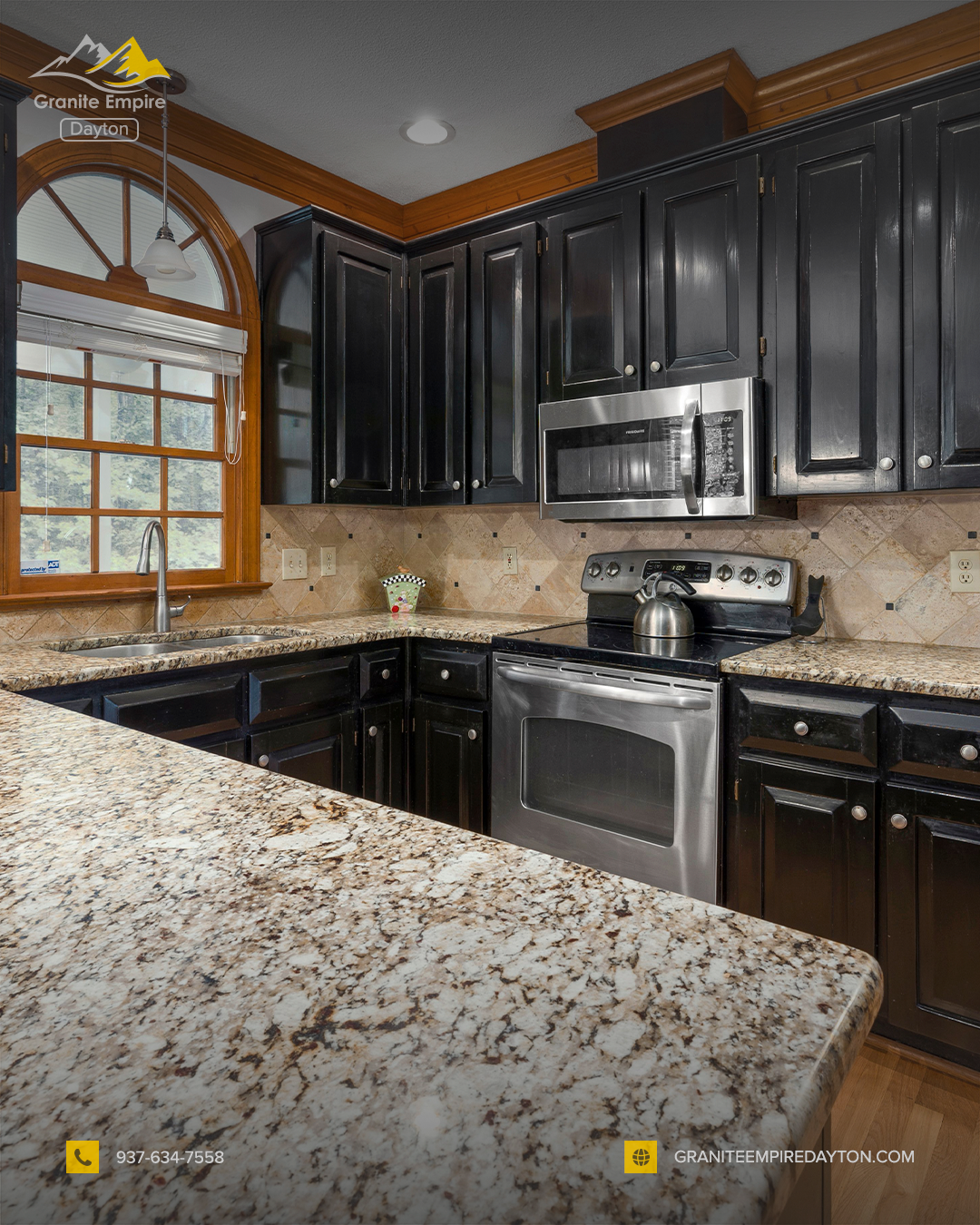
Short Answer: Granite kitchen countertops in Blue Ash, OH are a long-term investment that can last 15 to 25 years on average, and with meticulous care, they can even endure for over 100 years. Proper installation and regular maintenance are the keys to maximizing this lifespan. At Granite Empire of Dayton, we provide expert installation, digital templating, and in-house fabrication to help ensure your countertops last for decades. Granite starts at $45 per square foot with a package of $1,999 for 50 square feet installed.
What to Expect: The Average Lifespan
Granite is one of the most durable natural stones available, which is why it’s a top choice for busy kitchens. While the National Association of Home Builders notes that granite can function for a lifetime, the reality of daily kitchen use means the average countertop will need replacement every 15 to 25 years. This still significantly outlasts many other materials, such as laminate, wood, or epoxy.
The wide range in lifespan comes down to how you use and care for your countertops. A kitchen with heavy daily use, children, and frequent cooking will show more wear over time than a lightly used kitchen. For granite kitchen countertops in Blue Ash, OH, proper care is the deciding factor between a countertop that lasts a generation and one that needs replacement in a decade.
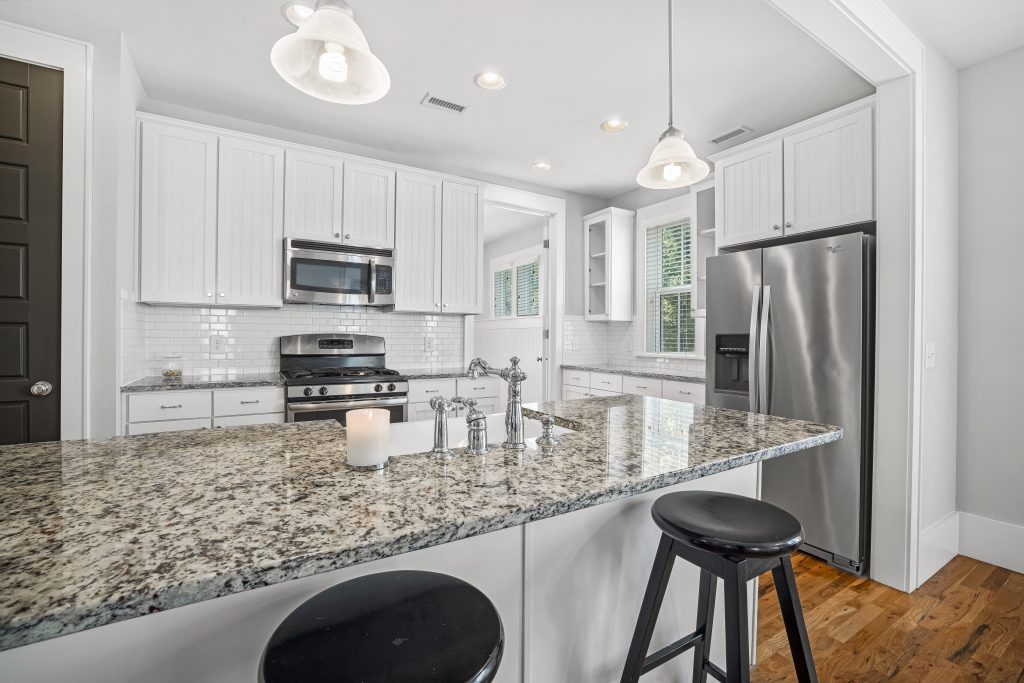
Factors That Affect Granite Longevity
Installation Quality
The first step in long-lasting granite countertops is proper installation. Improper installation can cause issues like chipping and cracking, as well as an unpleasant aesthetic with mismatched or raised seams. Professional granite kitchen countertops installers ensure proper support, leveling, and seam alignment. At Our installers use digital templating and in-house fabrication to eliminate common installation errors.
Daily Usage and Habits
Heavy use areas make countertops more susceptible to chips, stains, and cracks. Using cutting boards for food prep prevents knife marks and protects the stone’s sealant. While granite is scratch-resistant, cutting directly on the surface will dull your knives quickly. Using trivets or hot pads under hot cookware prevents thermal shock that could crack the stone. Although granite can withstand temperatures up to 1,200 degrees Fahrenheit, the sealant protecting it is less heat-resistant, so protect the surface from hot pans.
Sealing and Maintenance
Granite is naturally porous, meaning it can absorb moisture and become vulnerable to stains from red wine, coffee, and cooking oils. Sealing granite upon installation and periodically thereafter is essential for longevity. Most experts recommend resealing every 12 to 18 months, though some sources suggest every 1 to 3 years depending on the stone’s porosity. Lighter-colored granites tend to be more porous than darker ones. A simple water test can tell you when it’s time to reseal: if water beads up, the seal is effective; if it absorbs quickly, resealing is needed.
Cleaning Practices
Regularly cleaning granite countertops with a granite-safe cleaner prevents staining and fading, protects the sealant, and removes dirt and bacteria. Avoid harsh chemicals, especially acidic cleaners containing vinegar, lemon, or bleach, which can damage the sealant and etch the stone.
Signs It’s Time to Reseal or Restore
Granite countertops don’t wear out structurally, but they can show signs that maintenance is needed. If you notice water spots that don’t wipe away, dull areas where the polish has worn thin, or staining from spills, it’s time to reseal. Small chips can often be repaired using color-matched epoxy by professionals. Over time, granite may lose its luster from standard kitchen use, but professional polishing can restore its shine.
How Granite Compares to Other Materials
Granite offers superior longevity compared to most other countertop materials. Laminate averages only 15 to 30 years. Solid surface materials like Corian last 10 to 15 years. Quartz lasts 30 to 100 years. Marble lasts 20 to 100 years but requires more careful maintenance. For granite kitchen countertops in Blue Ash, OH, granite’s combination of durability, heat resistance, and unique natural patterns makes it a wise long-term investment.
Additional Factors That Can Extend Granite Life
Beyond basic care, several practices can further extend the life of your granite countertops. Regular dusting with a soft cloth prevents abrasive particles from scratching the surface during cleaning. Using coasters under glasses and bottles prevents rings from forming on the sealant. Wiping up spills immediately, especially acidic or pigmented ones, prevents staining before it can penetrate the stone. Reapplying sealant every 12 to 18 months, or as recommended, maintains the protective barrier against moisture and stains. Using gentle, pH-neutral cleaners preserves the sealant and the stone’s natural shine, keeping your granite looking new for decades.
Common Myths About Granite Longevity
There are several misconceptions about granite countertops that can lead to confusion. Many homeowners believe granite is indestructible, but while it is highly durable, it can still chip or crack under extreme force. Another myth is that granite doesn’t need sealing, which is false—granite must be sealed to prevent staining and moisture damage. Some think all granite is the same, but different types have varying porosity levels, with lighter stones generally requiring more frequent sealing. Understanding these facts helps homeowners properly maintain their granite kitchen countertops in Blue Ash, OH and avoid costly mistakes.
FAQ: Granite Kitchen Countertops Longevity in Blue Ash, OH
Q: How long do granite kitchen countertops last in homes?
A: With proper care, granite countertops can last 15 to 25 years on average, and over 100 years with meticulous maintenance. Many granite countertops outlast the home’s ownership.
Q: Do granite kitchen countertops need to be sealed?
A: Yes. Granite should be sealed upon installation and resealed every 12 to 18 months to prevent staining and moisture damage. Lighter granites may need sealing more often than darker ones.
Q: Can you put hot pans directly on granite countertops?
A: Yes, granite is heat-resistant and can withstand hot cookware up to 1,200 degrees Fahrenheit. However, using trivets is still recommended to protect the sealant layer and prevent thermal stress.
Q: What shortens the lifespan of granite countertops?
A: Poor installation, lack of sealing, using harsh cleaners, cutting directly on the surface, and failing to wipe up acidic spills can all shorten granite’s lifespan.
Q: Are granite kitchen countertops worth the investment?
A: Yes. Granite countertops typically recoup 60-80% of their cost at resale and last for decades, making them a solid long-term investment for your home.
Q: How do I know if my granite needs resealing?
A: Perform the water test. Drop a few drops of water on the surface. If the water beads up, the seal is effective. If it soaks in, it’s time to reseal.
Q: What is the average lead time for granite countertops?
A: At Granite Empire of Dayton, most projects complete within 7 to 14 days from consultation to installation.
Q: Can granite countertops be repaired if damaged?
A: Yes. Minor chips and scratches can be repaired using color-matched epoxy by professionals. Polishing can restore lost luster.
Contact Information for Granite Empire of Dayton
Ready to invest in granite kitchen countertops in Blue Ash, OH that will last for decades? Our company offers beautiful, durable granite at fair prices with professional installation. Our granite package is $1,999 for 50 square feet including sink, cutouts, installation, and old countertop removal.
Visit our showroom to see full slabs of White Sparkle, Dallas White, Azul Platino, Luna Pearl, Gray Star, Ubatuba Green, and Giallo Ornamental. Meet the team who will fabricate and install your countertops with precision.
We serve Blue Ash and the entire greater Cincinnati and Dayton area.
Granite Empire of Dayton
Call or text: (937) 634-7558
Visit our website: graniteempiredayton.com