
Short Answer: The main difference between marble and quartz for marble countertops in Kenwood, OH and quartz surfaces is that marble is a 100% natural stone while quartz is an engineered material. Marble offers unique veining, timeless elegance, and heat resistance but requires sealing every 6 to 12 months and can etch from acidic spills. Quartz is non-porous, never needs sealing, and resists stains completely, but is sensitive to high heat and lacks the natural depth of marble. At Granite Empire of Dayton, marble starts at $55 per square foot installed, and quartz also starts at $55 per square foot. We serve Kenwood and the greater Cincinnati and Dayton area.
Understanding the Fundamental Difference
When homeowners begin researching countertop materials, they often confuse marble and quartz because both are beautiful, durable, and widely available. However, these two materials are fundamentally different in their origin, composition, and performance.
Marble is a natural stone formed from limestone that has been subjected to intense heat and pressure over millions of years. This geological process creates the soft veining, luminous surface, and unique patterns that make marble so prized. Every slab of marble is one of a kind, featuring natural variations that cannot be replicated.
Quartz, despite its name, is not a natural stone. It is an engineered material made from approximately 90 to 95 percent ground natural quartz crystals combined with resins, polymers, and pigments. This manufacturing process creates a consistent, non-porous surface that offers predictable color and pattern.
For homeowners considering marble countertops in Kenwood, OH, understanding this fundamental difference is the first step in choosing the right material. Your lifestyle, maintenance preferences, and design goals will determine which material serves you best.
Appearance: Natural Elegance vs. Engineered Consistency
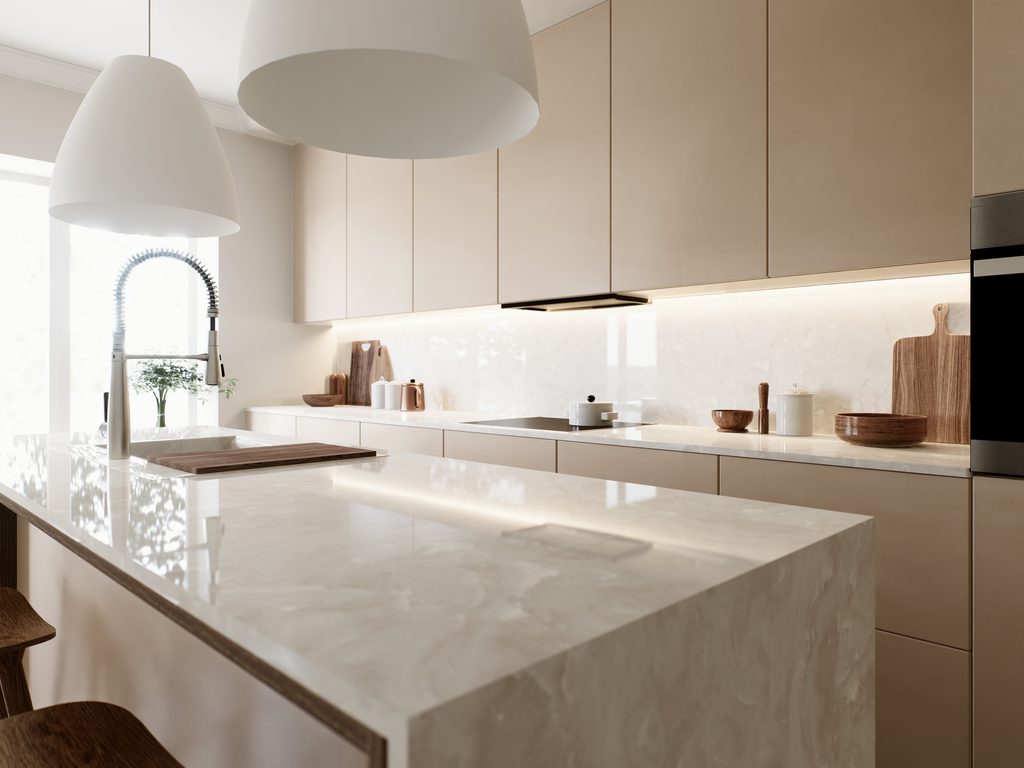
The appearance of marble is its greatest asset. Marble features soft, flowing veins that create a sense of movement and depth. The colors range from pure white to warm cream, with veining in gray, gold, green, or even red. Each slab is a work of art, and no two are ever identical. This natural uniqueness appeals to homeowners who want a one-of-a-kind countertop that tells a story.
Marble has been used in palaces, museums, and historic buildings for centuries. Its timeless elegance never goes out of style. Whether you choose classic Carrara with its subtle gray veining, dramatic Calacatta with bold gold and gray veins, or luxurious Statuario with its pure white background, marble makes a statement.
Quartz, by contrast, is engineered for consistency. Manufacturers can create colors and patterns that do not exist in nature. You can get quartz that looks like marble, granite, or concrete. You can get solid white, solid black, or vibrant colors. The pattern repeats predictably across the slab, ensuring a uniform appearance from one end to the other.
For homeowners who want a specific, consistent look, quartz is ideal. For those who value natural beauty and uniqueness, marble is unmatched. When choosing marble countertops in Kenwood, OH, consider whether you prefer the organic variation of natural stone or the predictable consistency of engineered quartz.
Durability and Maintenance: The Practical Differences
Both marble and quartz are durable materials, but they perform differently in daily use. Understanding these differences helps you choose the right material for your lifestyle.
Marble is softer than quartz. On the Mohs hardness scale, marble ranks three to five, while quartz ranks seven. This means marble scratches more easily. A knife dragged across marble can leave a mark. A heavy pot dropped on a marble edge can cause a chip. Marble also etches from acidic substances like lemon juice, vinegar, wine, and tomato sauce. These acids react with the calcium carbonate in marble, leaving dull spots that cannot be wiped away.
Marble is porous and requires sealing every six to twelve months to prevent stains. Without sealing, liquids can penetrate the stone and leave permanent marks. Even with sealing, marble is more prone to staining than quartz.
Quartz is non-porous and never needs sealing. Spills sit on the surface and wipe away easily. Red wine, coffee, oil, and juice will not stain quartz. This makes quartz a more practical choice for busy kitchens and families with children.
However, quartz has one significant weakness: heat. The resin binders in quartz can be damaged by temperatures above approximately 185 degrees Fahrenheit. A hot pan from the stove or a baking sheet from the oven can discolor quartz or leave a permanent ring. Trivets are essential with quartz.
Marble, on the other hand, handles heat well. You can place a hot pan directly on marble without damage. This makes marble a better choice for homeowners who cook frequently and want the convenience of setting hot cookware directly on the counter.
For marble countertops, the trade-off is clear: you gain heat resistance and natural beauty but must accept more maintenance and the possibility of etching. For quartz, you gain low maintenance and stain resistance but must use trivets and accept the lack of natural depth.
Cost Comparison
The cost of marble and quartz is similar at the entry level. At our company, both marble and quartz start at $55 per square foot installed.
However, the price range for each material varies. Carrara marble, the most affordable marble, starts at $55 per square foot. Calacatta marble ranges from $100 to $200 per square foot. Statuario marble can exceed $150 per square foot and reach $250 or more for premium slabs.
Quartz pricing is more consistent. Entry-level quartz starts at $55 per square foot. Mid-range quartz ranges from $75 to $110 per square foot. Premium quartz that mimics rare marbles ranges from $100 to $180 or more per square foot.
For a typical 50-square-foot kitchen, Carrara marble would cost approximately $2,750, while entry-level quartz would cost approximately $3,000. At the higher end, both materials can exceed $10,000 for luxury selections.
When comparing costs, remember that marble requires ongoing maintenance. Sealing every six to twelve months adds up over time. Professional resealing costs $50 to $100 per application. Quartz requires no sealing, so the initial price is the only cost.
Resale Value: Which Material Appeals to Buyers?
Both marble and quartz add value to your home. Real estate data shows that homes with stone countertops sell faster and for higher prices than homes with laminate or tile.
Marble appeals to buyers who appreciate luxury and timeless design. In high-end homes or historically styled properties, marble adds significant prestige. However, some buyers are deterred by marble’s maintenance requirements. They may see it as a liability rather than an asset.
Quartz appeals to a broader range of buyers. Its low maintenance, stain resistance, and modern appearance make it attractive to busy families and professionals. According to the National Kitchen and Bath Association, 78 percent of design professionals expect quartz to be the preferred countertop material in the coming years.
For homeowners planning to sell in the near future, quartz may offer broader appeal. For those in luxury markets or historic homes, marble may command a premium. When considering marble countertops in Kenwood, OH, think about your local market and the expectations of potential buyers.
Which Material Is Right for Your Kenwood Home?
Choosing between marble and quartz depends on your priorities.
Choose marble if you love natural beauty, unique veining, and timeless elegance. Marble is ideal for homeowners who appreciate the character that develops over time, including the patina of etching and light scratches. Marble works best in powder rooms, guest bathrooms, and kitchens where you are prepared for the maintenance requirements. It is also an excellent choice for baking stations, where its cool surface is an advantage.
Choose quartz if you want zero maintenance, stain resistance, and consistent appearance. Quartz is perfect for busy families, rental properties, and anyone who prefers a “set it and forget it” surface. It works beautifully in kitchens, bathrooms, and laundry rooms.
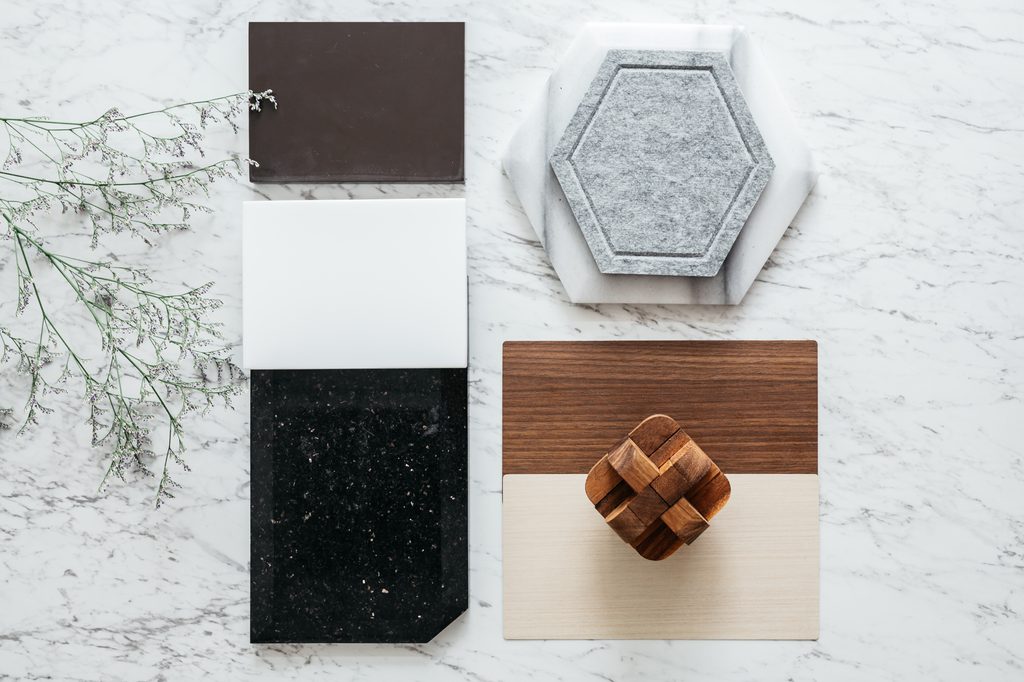
We carry both marble and quartz in full slabs. Visit our showroom to see them side by side and make an informed decision for your home.
FAQ: Marble vs. Quartz in Kenwood, OH
Q: Which is more durable, marble or quartz?
A: Quartz is more durable in terms of scratch resistance and stain resistance. Marble is more heat-resistant. Both last decades with proper care.
Q: Do marble countertops need to be sealed?
A: Yes. Marble needs sealing every 6 to 12 months. Quartz never needs sealing.
Q: Can you put hot pots on marble countertops?
A: Yes. Marble handles heat well and can withstand hot cookware. Quartz requires trivets.
Q: Which material is more expensive, marble or quartz?
A: Both start at $55 per square foot at Granite Empire of Dayton. However, premium marble like Calacatta can cost more than premium quartz.
Q: Do marble countertops stain easily?
A: Marble stains more easily than quartz, especially if not sealed properly. Wine, coffee, and oil should be wiped up promptly.
Q: Does quartz look like marble?
A: Yes. Many quartz colors are designed to mimic marble, including Crystal White, Mystique White, and White Lace. These offer the marble look without the maintenance.
Q: What is the average lead time for marble and quartz countertops?
A: At our company, most projects complete within 7 to 14 days from consultation to installation. Marble may take slightly longer due to careful handling.
Q: Which material is better for a busy family kitchen?
A: Quartz is better for busy families because it is non-porous, never needs sealing, and resists stains. Marble requires more care and can etch from acidic spills.
Contact Information for Granite Empire of Dayton
Ready to choose between marble countertops in Kenwood, OH and quartz for your home? Granite Empire of Dayton offers both materials with professional installation, digital templating, and in-house fabrication. Our marble and quartz packages start at $55 per square foot. Granite starts at $45 per square foot with a package of $1,999 for 50 square feet.
Visit our showroom to see full slabs of Carrara, Calacatta, and Statuario marble alongside Crystal White, Mystique White, and White Lace quartz. Touch the surfaces. Compare the colors. Meet the team who will fabricate and install your countertops.
We serve Kenwood and the entire greater Cincinnati and Dayton area.
Granite Empire of Dayton
Call or text: (937) 634-7558
Visit our website: graniteempiredayton.com